

Skip to content

Automated Mental Availability Analysis

Based on the work of Professor Jenni Romaniuk (of the Ehrenberg-Bass Institute for Marketing Science), Mental Availability analysis is a measure of how easily and readily a brand comes to mind in a specific buying scenario (known as Category Entry Points). 

quantilope's automated Mental Availability analysis includes four key metrics that can be leveraged in any quantilope tracking study - Mental Market Share, Mental Penetration, Network Size, and Share of Mind. 

Women doing research on iPad

Benefits of leveraging Mental Availability analysis 

Benefits of Mental Availability icon 1

Grow your brand:
Understanding when and why consumers think of a brand helps businesses identify opportunities/gaps in the market.

Benefits of Mental Availability icon 2
Benefits of Mental Availability icon 3

Optimize campaigns:
Insights from Mental Availability analysis can help marketers develop more effective campaigns that resonate with consumers.

Build brand equity:
By consistently appearing in consumers' minds in relevant situations, a brand can build stronger associations and solidify its position in the market.

Mental Availability metrics 

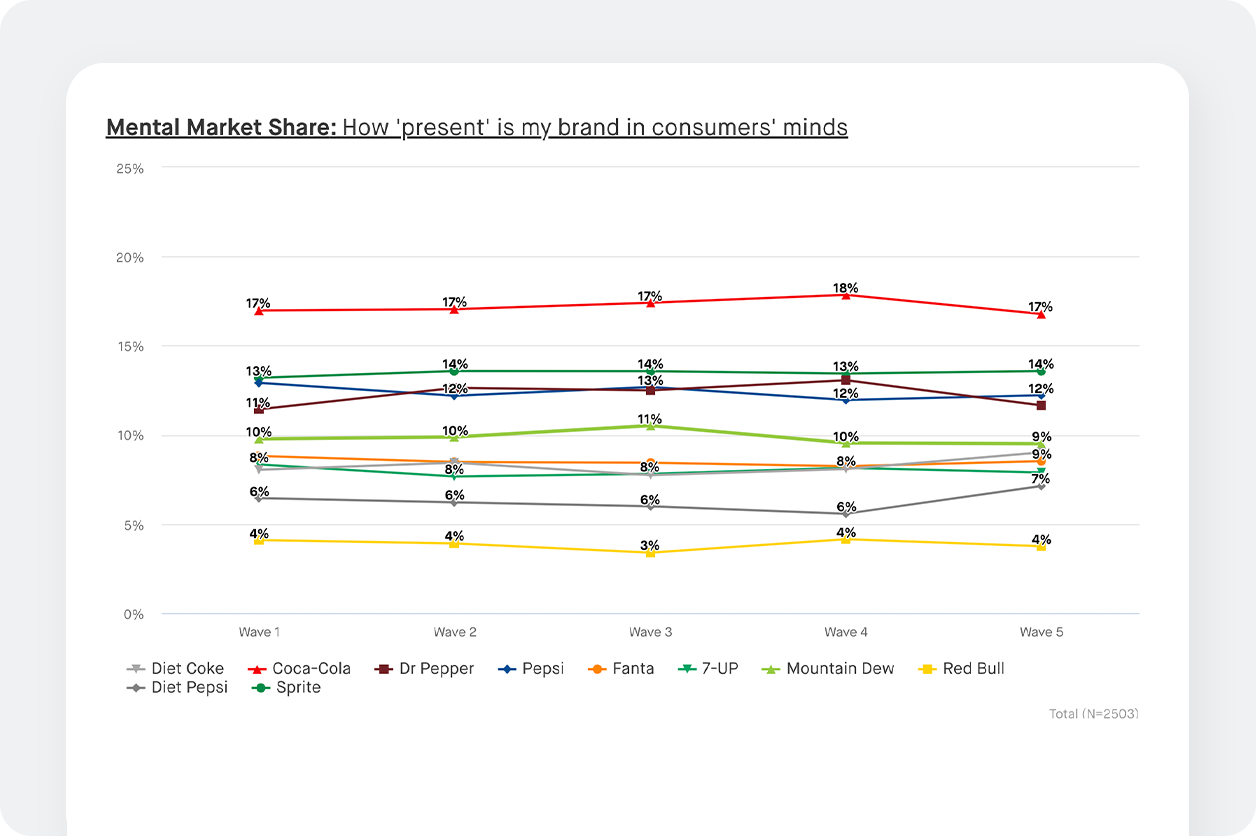
Mental Market Share (MMS):

How present a brand is in consumers’ minds with regard to all Category Entry Points (CEPs).

Mental Market Share chart screenshot

If MMS is higher than actual sales market share, consumers might face physical barriers for the purchase. Investigate physical availability in order to leverage your brand’s full potential.

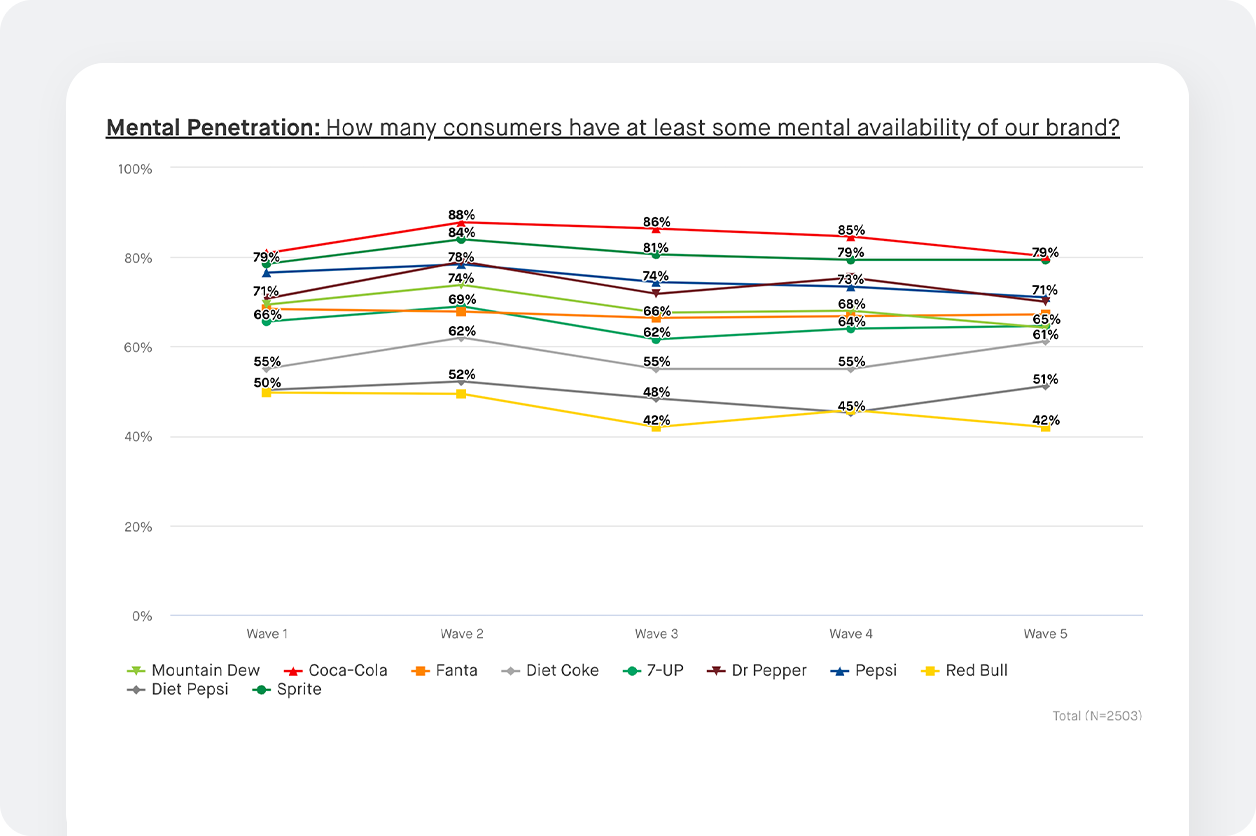
Mental Penetration (MPen):

How many consumers have at least some mental availability of a brand. 

Mental Penetration chart screenshot

MPen is most interesting for non-buyers because this clearly outlines your brand’s growth potential. If you create just one connection with existing non-buyers of your brand, your MPen will increase. Focusing on higher reach (or broadening your target audience) can aid in increasing MPen.

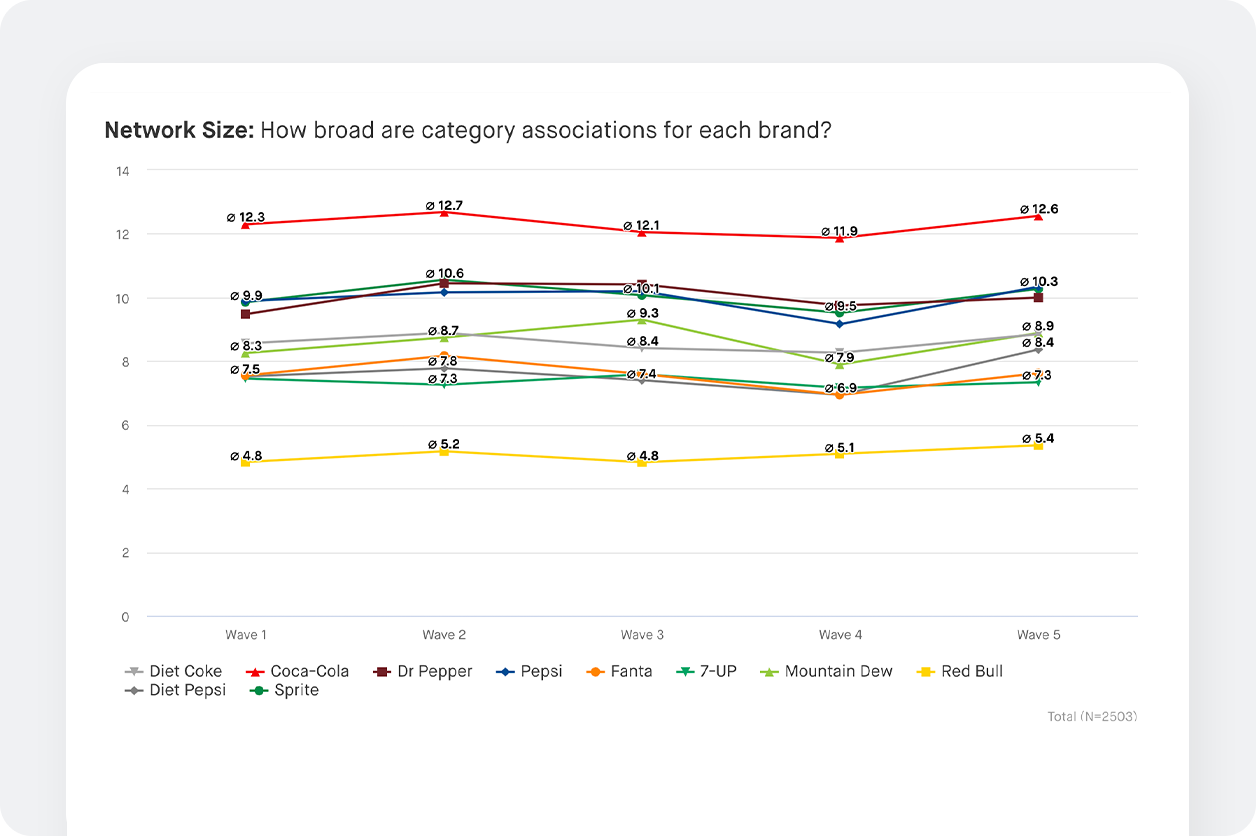
Network Size (NS):

How broad/varied category associations are for each brand in your category.

Network Size chart screenshot

If brands rank higher in Network Size than MPen, brands are struggling to reach new buyers and instead are broadening existing networks. Conversely, if brands rank relatively higher in MPen than NS, this indicates that messaging should be broader - or the branding of existing comms should be closely reviewed.

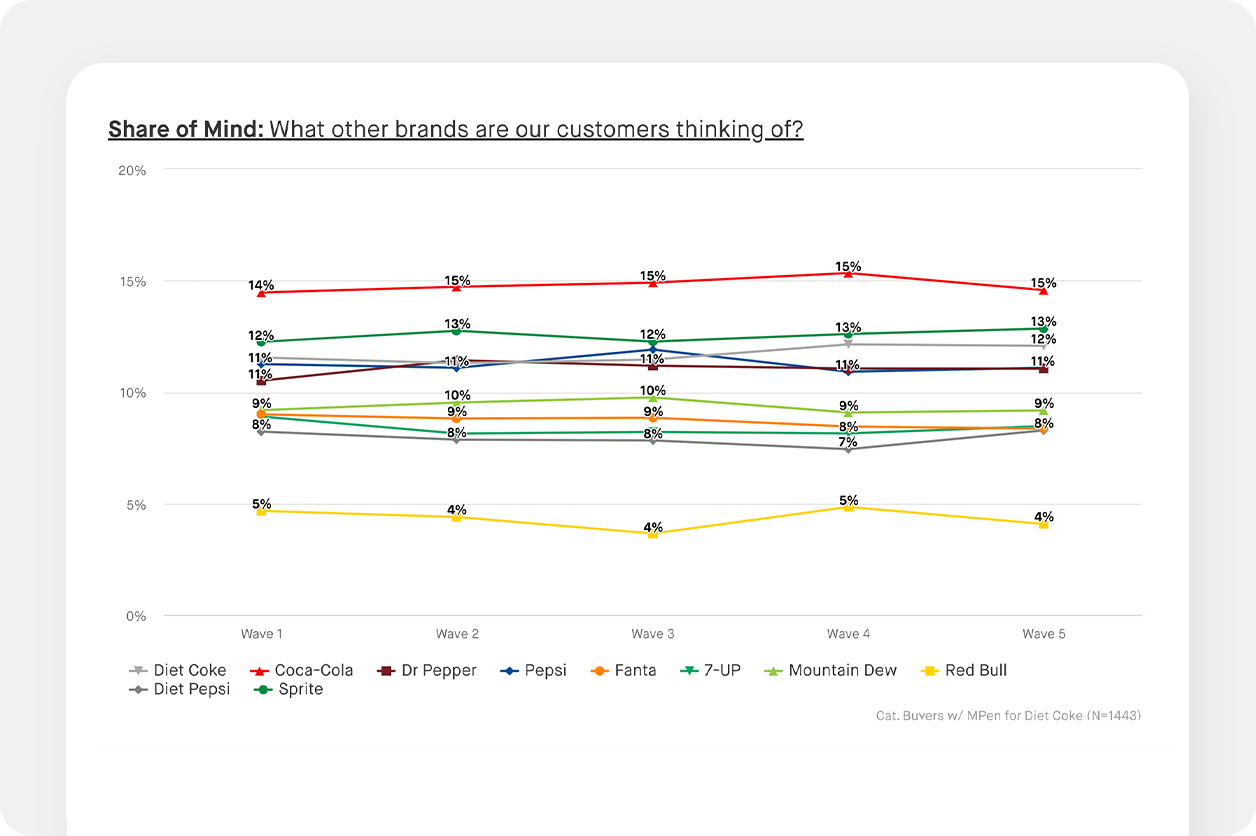
Share of Mind (SoM):

What other brands customers are thinking of in addition to a specific brand? 

Share of Mind chart screenshot

Share of Mind tracks how your competitors impact the people that are most interesting for your brand (people who have you mentally available). SoM is usually more interesting for bigger brands, especially among brand buyers as it can indicate that competitors might be “stealing” a brand’s buyers.

It’s exciting to see quantilope automate a new, innovative approach to
brand health tracking - introducing new metrics from the Ehrenberg-Bass Institute that unlock actionable insights right out of the gate and identify
opportunities for brand growth
..”

-Kelly Wade, Director of Marketing

Floridas Natural logo


What does Mental Availability mean?

Mental Availability measures how easily and readily a brand comes to mind when consumers face specific buying scenarios, known as Category Entry Points (CEPs). These could be situations like "going on vacation," "having friends over," or "when feeling thirsty." 

These scenarios prompt consumers to go out and shop in those relevant categories (like sunscreen for vacation, potato chips for hosting friends, and soda for thirst). As a brand, you want your specific brand to come to mind in those scenarios — aka, having your brand 'Mentally Available" in consumers minds during the moments that matter most. 

What's the difference between brand awareness and Mental Availability?

Brand awareness measures which brands exist in a category and how they compare to one another, while Mental Availability measures which brands come to mind in specific moments that are linked to purchase opportunities. 

Mental Availability is important for brands to understand, measure, and act one, because if consumers aren't shopping in your category, they aren't shopping for your brand. 


How can I increase Mental Availability?

Brands increase Mental Availability by broadening their reach to new audiences, creating consistent associations across a wider network of Category Entry Points, and ensuring their messaging appears in relevant consumer purchase moments (aligning Mental Availability with Physical Availability). 

What are key metrics for tracking Mental Availability?

There are four key metrics that form Mental Availability. 

  • Mental Market Share: Your brand's share of total mental associations across the entire category. It indicates your relative strength in the collective memory of the market compared to competitors.
  • Mental Penetration: The percentage of potential buyers who associate your brand with at least one category cue. It measures how many people have your brand "on their radar" during any buying occasion.
  • Network Size : The average number of different cues or situations linked to your brand. A higher number means your brand is relevant across a wider variety of buying motives and contexts.
  • Share of Mind: The strength of your brand’s association with specific, high-value cues, relative to competitors. 

How does Mental Market Share relate to sales market share?

Mental Market Share (MMS) has been directly correlated to sales market share; in quantilope's own meta-analysis done in 2024 across more than 100 different brands, we found that the average correlation between MMS and sales data is at r = .83 with an R² of .69. This means that we can explain almost 70% of the variance in actual sales data through a single survey metric!

If your MMS is significantly higher than your sales share, it suggests your marketing is working, but "physical availability" (distribution, pricing, or shelf space) is likely blocking the final purchase. On the flip side, if your sales market share is higher than your MMS, it may indicate that your sales are being propped up by high distribution, lower pricing, or prominent shelf space rather than genuine brand salience.

How does Mental Availability relate to Mental Advantage analysis?

Mental Availability is a brand's total probability of being thought of in a buying situation. Mental Advantage is a metric that identifies where a brand performs significantly higher than expected, once you account for the brand's size and how common (prototypical) a specific Category Entry Point or brand association is to the category at large.

Request a Mental Availability analysis demo